
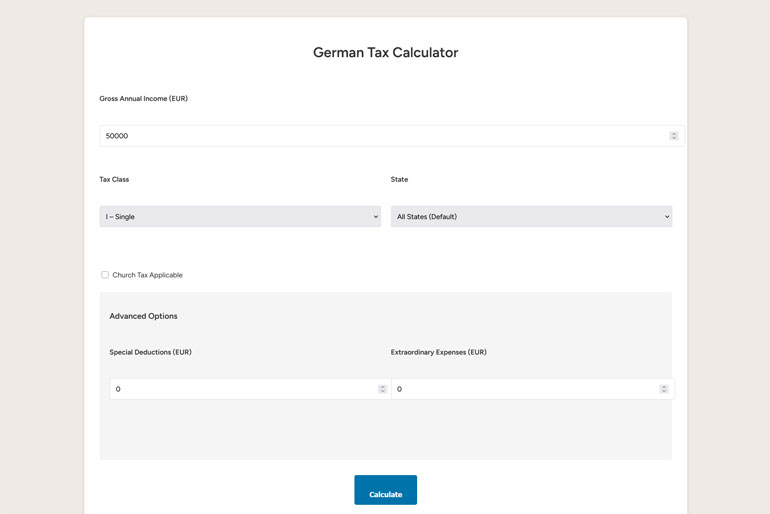
Working as a freelancer in Germany gives you freedom, flexibility, and control over your income. But when tax season arrives, things can feel confusing. Unlike regular employees, freelancers handle their own taxes. This is where a tax calculator for freelancers in Germany becomes very useful. It helps you understand how much tax you may owe and prevents unpleasant surprises later.
This guide explains how tax calculators work, why they matter, and how freelancers in Germany can use them with confidence.
Why Freelancers in Germany Need a Tax Calculator
Freelancers do not have taxes automatically deducted from their income. Instead, you receive the full amount from your clients and then pay taxes yourself. Without planning, this can lead to stress when payments are due.
A tax calculator helps you:
- Estimate how much tax to set aside
- Plan your monthly budget better
- Avoid underpaying or overpaying
- Feel more confident about your finances
Using a calculator regularly gives you a clearer picture of your real income after taxes.
What Taxes Do Freelancers Pay in Germany?
Freelancers in Germany may be responsible for several types of taxes. A good tax calculator considers all of them.
Income Tax
This is the main tax freelancers pay. The rate increases as your income grows. If your income is low, you may pay little or no income tax. Higher income leads to higher tax rates.
Solidarity Surcharge
This is a small extra charge added to income tax. Many freelancers with lower income may not pay it, but higher earners usually do.
Church Tax (Optional)
If you are registered with a church in Germany, this tax applies. If not, the calculator should allow you to turn it off.
Value Added Tax (VAT)
Some freelancers must charge VAT on their services. Others are exempt under the small business rule. A tax calculator often includes an option to add or remove VAT based on your situation.
Health Insurance Contributions
Freelancers pay their own health insurance. While not a tax, many calculators include this to show your full financial picture.
How a Tax Calculator for Freelancers Works
A tax calculator asks for basic information and then gives an estimate. The process is usually quick and simple.
You typically enter:
- Your yearly or monthly income
- Your marital status
- Whether you have children
- Your health insurance type
- Church tax preference
- VAT status
After entering this information, the calculator shows:
- Estimated income tax
- Any extra charges
- Your take-home income
- Suggested amount to save for taxes
It is important to remember that calculators give estimates, not exact numbers. Still, they are very close and extremely helpful for planning.
Monthly vs Yearly Calculations
Some freelancers prefer monthly calculations, while others use yearly ones. Both have benefits.
Monthly calculations help you:
- Set aside money every month
- Avoid spending tax money by mistake
- Keep cash flow steady
Yearly calculations are useful when:
- Planning long-term finances
- Reviewing overall income
- Preparing for annual tax filings
Many freelancers use both to stay organized.
Common Mistakes Freelancers Make Without a Calculator
Not using a tax calculator often leads to errors that can be avoided.
Some common mistakes include:
- Spending all earned income without saving for taxes
- Forgetting extra charges like solidarity surcharge
- Underestimating tax payments
- Getting stressed when tax deadlines arrive
A simple calculator reduces these risks and makes freelancing feel more secure.
Choosing the Right Tax Calculator in Germany
Not all calculators are the same. When choosing one, look for these features:
- Designed for freelancers or self-employed workers
- Clear input fields with explanations
- Ability to include or exclude VAT
- Updated to match current German tax rules
- Easy-to-read results
A good calculator should feel simple, not overwhelming.
How Often Should Freelancers Use a Tax Calculator?
Freelancers should not use a calculator only once a year. Regular use gives better control.
You may want to check:
- Monthly, to track income changes
- After landing a new client
- When raising your rates
- Before making big purchases
- At the start of a new year
Frequent checks help you stay prepared and confident.
Can a Tax Calculator Replace a Tax Advisor?
A tax calculator is a great tool, but it does not replace professional advice. Calculators are best for planning and estimates. A tax advisor helps with:
- Filing official tax returns
- Handling complex situations
- Claiming deductions correctly
- Dealing with tax offices
Many freelancers use both. The calculator helps day-to-day, while the advisor supports bigger decisions.
Final Thoughts
Freelancing in Germany offers many opportunities, but taxes are part of the journey. A tax calculator for freelancers in Germany makes things easier by giving you clarity and peace of mind. It helps you understand your real income, plan ahead, and avoid stress when tax time comes.
By using a calculator regularly and staying aware of your financial situation, you can focus more on your work and less on worrying about numbers. Simple tools, used wisely, can make freelancing feel much more manageable.
Leave a Reply